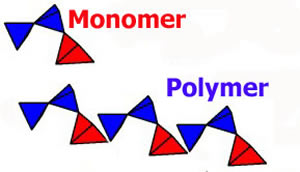
 Plastics are made of monomers. Monomers are molecules that join chemically to other monomers to form a polymer. The process by which monomers join to form a polymer is called polymerization.
Polymerization is a process by which monomers join chemically to form a polymer. The monomers may be all of the same type, or they may contain different substances. At least 100 monomers are necessary to form a polymer that has certain properties, such as elasticity and the ability to form fibres.

There are three main groups of plastics: thermosets, thermoplastics and elastomers.
Thermosets are plastics that cannot be softened. If you try to heat them strongly, they break. They're hard, rigid and stronger than thermoplastics,. If you want to form a thermoset, you need to put the plastics through a curing stage. During this process, more links are formed between the original long chain molecule. This is called cross-linking. This process is irreversible, and that's why thermosets cannot be softened.


 Elastomers plastics are similar to rubber. They're able to return to their original shape after being stretched. In normal conditions, the molecules making up an elastomer are irregularly coiled. With the application of force, the molecules straighten out in the direction in which they're pulled. Then, when no force is strightening them, the molecules return to their normal shape.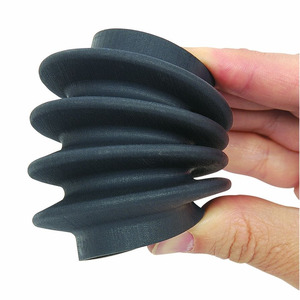
Plastics have many properties, but the main ones are these: Plastics are lightweight, they're resistant, they have a very good insulating capacity (electrical, thermal and acoustic), they're ease of handling and safety, they are very versatile, they are recyclable, they have a lot of uses, they have a cheap manufacturing, and they're impermeable. Because they have all these properties, they are practically in all the objects we use in out routines and lives.

 However, plastics are not so good for our environment. Plastics pollute cities, ecosystems, forests and the sea. They contain many dangerous chemicals inside, and they are very difficult to decompose. For example, when an animal eats a piece of plastic, it doesn't digest it, and it stays inside the animal. Then, when a person kills the animal and eats it, the person will be polluted by the plastic. The sea is also very polluted. In the Pacific Ocean, there's a large concentration of plastic called "the plastic soup", and it's estimated that it covers 1.400.000 km2.


During this unit we've used some new TIC tools to do our presentations. Toondoo to do a comic, and Emaze to do a presentation about the making of our natural chewing gum.
The comic was created to warn people not to produce plastic rubbish. For this, we used Toondoo. It's an unusual tool where you can create as many comics as you want and the publish them. In the Toondoo creator there are lots of templates, objects, characters, many speech bubbles and onomatopoeias that you can use. The only problem we found is that you cannot create more than five vignettes in a comic, so we think it's a little short for a comic. But in general, it's a very creative TIC tool! Here's our comic:


To do the presentation about the making of our natural gum we used Emaze. It was the first time we used it, and we wanted to try if it was good or not. And it's amazing! You can create as many presentations as you want and you can include images, text, pre-designed images, links and more things. There are many templates designed previously by the program that you can use for your presentation, or you can start from a blank template. But the most exciting thing is the dipositive transition. They're astonishing! They are in 3D. For example, we saw a template that was a gallery, and each wall was a dipositive. When you passed from a dipositive to another, it was like if you were walking through the gallery. It's very well-made. We think it's a cool TIC tool!

