
The activity that helped me to learn all these things about the energies was the one with the Scratch. In this activity we searched a lot of information about the solar energy, the eolic energy, tidal energy, hydroelectric, geothermal, biomass, petrol energy, coal energy, natural gas and nuclear energy. We also looked up their advantages and disadvantages, and if they were renewable or non-renewable. We divided them in renewables and non-renewables, and then we explained how did they work, and their advantages and disadvantages. Solar energy, eolic energy, tidal energy, hydroelectric energy, biomass energy and geothermal energy are the renewable ones. They don't pollute the environment and they will never end, we will always have their energy. The non-renewable are: petrol energy, coal energy, natural gas energy and nuclear energy. They pollute the environment, and they are one of the main causes of the climate change, and we will run out of the someday. I think this project was very interesting not only because we learned a lot of things about the different types of energy, also because we learned how to use a new TIC tool and how to program a game. Pretty useful!
Here's the link to our project: https://scratch.mit.edu/projects/114188763/


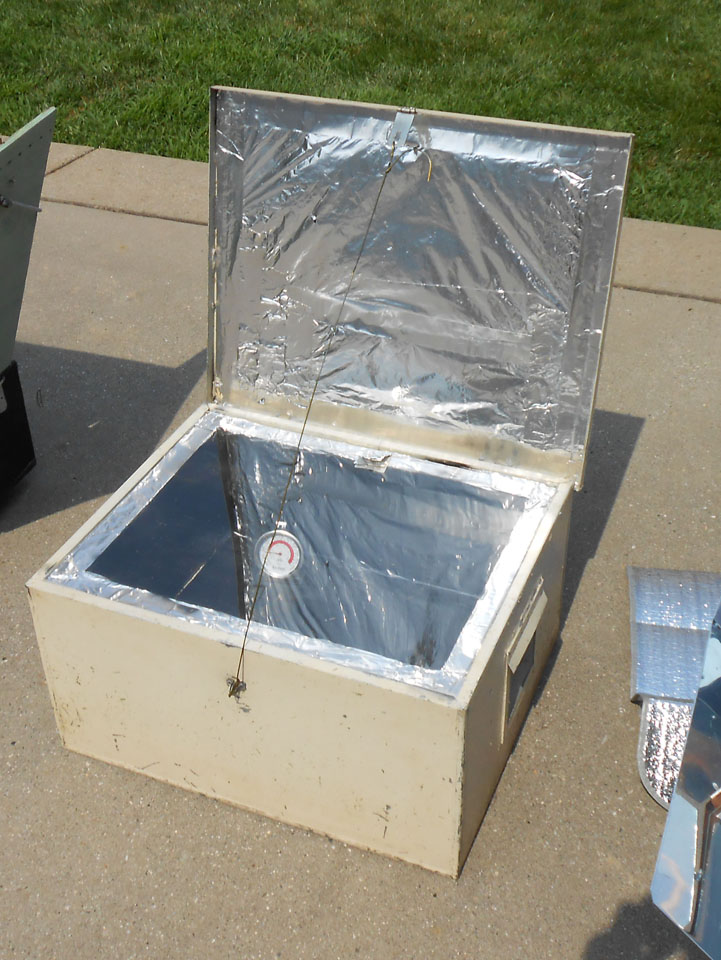
The other project we did was a sun oven. For this project we used the following materials: wood, newspaper, aluminium paper, glass, black paint and some tacks. We used the wood to build the skeleton of the project, and the tacks to attach them together. The newspaper worked as isolating material, so we put it between the big box and the small one, in order to trap the heat a much as possible. We used the black paint to paint the bottom of the project, to also gain more heat, and the glass to cover the upper part of the oven to trap the heat. Finally, the aluminium paper acted as reflecting material, in order to make the sunlight bounce inside the oven. Later, we tested it, and we tried to cook an egg, and it worked! We put the sun oven for six hours in the sun (a lot of time), but there were lots of cloud, so the sun was appearing and disappearing constantly. But in a normal day, you can cook an egg with 30 minutes. In my opinion, this task was very interesting because we had to make a real oven that had to be able to cook, and it was a project we hadn't done never before. It was a great task!


No comments:
Post a Comment